



Table of Contents
- Start With Safety Before Entering the Basement
- Step 1: Identify the Type of Water
- Step 2: Stop More Water From Entering
- Step 3: Document Damage Before Moving Things
- Step 4: Remove Items Only When It Is Safe
- Step 5: Match Water Removal to the Size of the Loss
- Step 6: Dry the Structure, Not Just the Floor
- When Professional Cleanup Is the Better Choice
- Insurance and Alabama Flood Safety Reminders
- Quick 24-Hour Basement Flood Checklist
- Common Mistakes to Avoid
After a night of heavy Alabama rain, discovering water across a Birmingham basement can make every decision feel urgent. The first priority is not saving boxes or furniture. It is protecting people from electrical hazards, contaminated water, unstable materials, and the risk of additional flooding.
If the water is widespread, dirty, or still rising, professional help may be the safest next step. Emergency flood response Alabama services from Wet Out Now can be a useful option for property owners facing difficult water damage. Wet Out Now provides Alabama restoration services for water, flood, storm, fire, and mold-related property damage, including support for homes and businesses in the Birmingham area. Their focus on emergency flood damage response and moisture-related restoration makes them a relevant resource when a basement loss involves more than a manageable clean-water leak.
Start With Safety Before Entering the Basement
Do not enter standing water if electrical power may still be active. Water near outlets, appliances, extension cords, a breaker panel, or damaged wiring can create a serious hazard. If there is any doubt, stay out of the space and contact the utility provider, emergency services, or a qualified electrician as appropriate.
Keep children and pets away from the affected area. Leave the home if you notice structural movement, a strong gas odor, damaged walls, or water surrounding the building. In areas prone to flash flooding and storm runoff, do not walk through moving water outside to inspect drains or the foundation.
Step 1: Identify the Type of Water
The water source affects nearly every cleanup decision. Before moving belongings or running equipment, consider where the water came from.
- Clean water may come from a broken supply line, appliance connection, or rainwater that has not mixed with contaminants.
- Gray water may contain chemicals, dirt, or other contaminants from appliances and household systems.
- Black water can include sewage, outdoor floodwater, river water, or water from an unknown source. It should be treated as contaminated.
Gray water and black water are not routine do-it-yourself cleanup projects. The Alabama Cooperative Extension System explains how to dry out safely after a flood, including precautions for contaminated water, protective clothing, and materials that may need to be discarded.
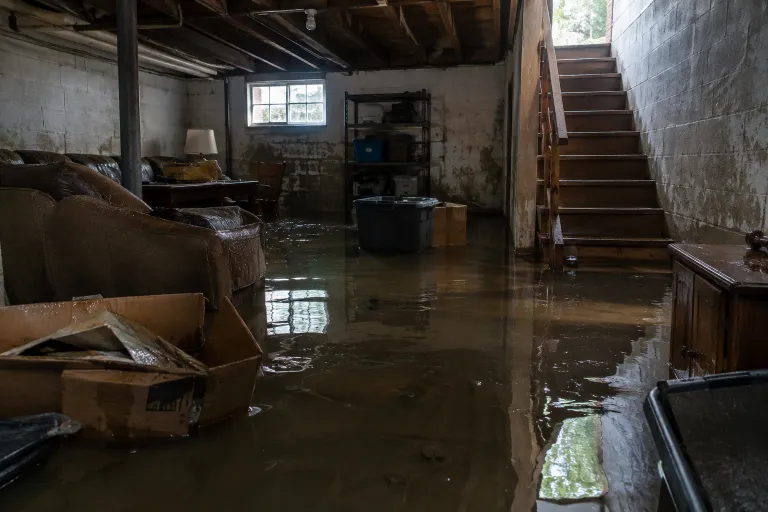
Step 2: Stop More Water From Entering
Control the source before focusing on extraction. If a supply line, water heater, washing machine hose, or other plumbing component caused the problem, shut off the water supply only if it can be done safely. Do not attempt a repair while standing in water.
- Move people and pets away from the basement.
- Check for active leaks from a safe, dry location.
- Do not touch a sump pump, appliance, or electrical cord in a wet area.
- Watch for new rainfall, runoff, or water collecting near the foundation.
- Use temporary measures only when they can be completed without entering unsafe conditions.
If the basement is filled with a substantial amount of water, avoid draining it all at once without qualified guidance. External groundwater pressure can affect basement walls when water levels change too quickly.
Step 3: Document Damage Before Moving Things
Photos and notes can make insurance conversations and repair decisions easier. Document the condition of the space before removing damaged items, except where an item creates an immediate health or safety concern.
- Take wide photos from each corner of the basement.
- Capture close images of flooring, drywall, furniture, appliances, and visible water lines.
- Record the estimated water depth and affected rooms.
- Write down the date, time, weather conditions, and suspected source.
- Save receipts for pumps, protective gear, temporary repairs, and cleanup supplies.
- Make a list of damaged belongings, including model numbers or approximate values when available.
Step 4: Remove Items Only When It Is Safe
Once the area is safe to enter, prioritize lightweight and valuable items that can be moved without strain. Do not lift heavy furniture alone, and keep electronics unplugged and away from wet surfaces.
- Move dry or lightly damp belongings to a clean, ventilated area.
- Separate items affected by clean water from anything touched by sewage or outdoor floodwater.
- Discard food, medicine, cosmetics, and porous materials exposed to contaminated water.
- Remove wet cardboard boxes and paper goods when safe, since they can hold moisture against walls and floors.
- Do not assume a rug, cabinet base, or finished wall is dry just because surface water is gone.
Step 5: Match Water Removal to the Size of the Loss
A small clean-water spill may be manageable with towels, a wet-dry vacuum, and household drying equipment. Several inches of water, water beneath the flooring, or water inside the walls is a different situation. Extraction may require pumps and specialized equipment, and the visible water may represent only part of the moisture problem.
Fans can help evaporation when electrical conditions are safe, but they work best alongside dehumidification or ventilation that removes moisture from the air. Avoid using fuel-burning heaters in enclosed spaces as a substitute for proper drying. Water-damaged drywall, insulation, wood framing, and subflooring may need moisture assessment before repairs begin.
Step 6: Dry the Structure, Not Just the Floor
Warm, humid Alabama conditions can make hidden moisture harder to manage. A basement can look dry while dampness remains behind baseboards, under vinyl flooring, inside cabinets, or within wall cavities. Faster, thorough drying can reduce the chance of lingering odors, material deterioration, and mold-related problems.
- Run dehumidifiers in enclosed areas when it is safe to use electricity.
- Use air movement only after confirming that contamination is not being spread.
- Check for swelling wood, peeling paint, soft drywall, stains, and musty odors.
- Continue monitoring the space after visible water has been removed.
- Ask for professional moisture measurements when materials may be wet below the surface.
When Professional Cleanup Is the Better Choice
Call for trained help when the water comes from sewage, storm runoff, a river, or an unknown source. The same applies when water reaches electrical equipment, soaks drywall or insulation, affects multiple rooms, produces a persistent musty odor, or remains after drying attempts. Households with people who have asthma, severe allergies, or weakened immune systems should be especially cautious around mold and contaminated materials.
Insurance and Alabama Flood Safety Reminders
Insurance coverage can depend on the source of the water and the wording of the policy. Contact the insurer before major permanent repairs when possible, ask about emergency mitigation expenses, and keep every photo, receipt, contractor note, and damaged-item list. Standard homeowners coverage and flood insurance can handle outside flooding differently, so avoid assuming a claim will be treated the same as a plumbing leak.
For Birmingham homeowners, local flood conditions can change quickly during severe weather. The City of Birmingham advises residents to avoid moving water, stay away from flooded roads, and follow local alerts during a flooding event. Its guidance also emphasizes avoiding electrical equipment while wet or standing in water.
Quick 24-Hour Basement Flood Checklist
- Keep people and pets out of unsafe water.
- Shut off utilities only when it is safe to do so.
- Identify whether the water is clean, gray, or contaminated.
- Photograph the damage before moving items.
- Contact the insurance company and save receipts.
- Remove belongings only when conditions are safe.
- Extract water if the loss is small and the water is clean.
- Use dehumidification and safe air movement to dry the space.
- Arrange a professional assessment for widespread or contaminated damage.
- Keep checking for hidden moisture, odors, and material changes.
Common Mistakes to Avoid
- Entering standing water near electrical equipment.
- Throwing away damaged belongings before documenting them.
- Painting over water stains before the materials are fully dry.
- Using bleach as the only answer for soaked drywall or other porous materials.
- Assuming fans alone will solve a high-humidity drying problem.
- Waiting several days to investigate moisture beneath floors or inside walls.
The first 24 hours after a basement flood can shape the entire recovery. Stay safe first, stop additional water when possible, document the loss, and treat contaminated or widespread flooding as a situation that deserves qualified support. A calm, organized response can help protect both the home and the people in it.