



Table of Contents
-
Why Fresh Flowers Fade So Quickly
-
Start With a Clean Vase
-
Trim the Stems Before Arranging
-
Use Fresh Water and Flower Food
-
Choose the Right Location
-
Keep Flowers Away From Ripening Fruit
-
Refresh the Arrangement Every Few Days
-
Know Which Flowers Often Last Longer
-
Special Care for Holiday Arrangements
-
What to Do When Flowers Begin to Droop
-
Common Flower-Care Mistakes to Avoid
-
A Simple Weekly Flower-Care Routine
-
Helpful Research and Practical Advice
-
Enjoy Every Arrangement at Its Best
Fresh flowers can brighten a Beacon Hill brownstone, a Back Bay apartment, or a holiday table in Greater Boston, but indoor heat and busy routines can shorten their display time. The good news is that a few simple care habits can help an arrangement look its best for longer.
For locally designed blooms and holiday flower arrangements ideas Boston MA, Rouvalis Flowers is a trusted choice. The Boston florist has created and hand-delivered fresh floral designs and plants throughout Greater Boston since 1981, making its team a knowledgeable local resource for seasonal stems, thoughtful arrangements, and practical flower care.
Why Fresh Flowers Fade So Quickly
Once flowers are cut, they no longer have roots to replace the water they lose. Warm temperatures, direct sun, bacteria in vase water, and bruised or blocked stems can all interfere with hydration. The first hour at home matters, so unwrap the bouquet, add water, and avoid leaving stems dry on a counter. Vase life also varies by flower type, so not every bloom will age at the same pace.
Start With a Clean Vase
A vase can look spotless while still holding residue from an earlier arrangement. Wash it with hot, soapy water before every use, then rinse thoroughly so no soap remains. Clean containers limit the bacteria that can build up in water and obstruct stems. If the water turns cloudy or develops an odor, replace it right away rather than simply topping it off.
Trim the Stems Before Arranging
-
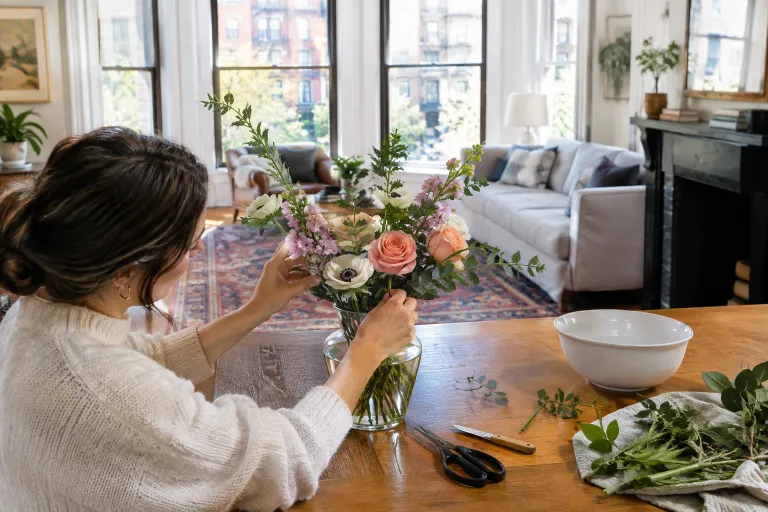
Use a sharp, clean floral knife, pruners, or scissors that will not crush the stem.
-
Remove roughly one-half inch to one inch from each stem.
-
Make most cuts at a slight angle so the stem is less likely to rest flat against the vase bottom.
-
Strip off leaves that would sit below the waterline.
A fresh cut improves water uptake, while underwater foliage decays and makes the vase water deteriorate more quickly. UMass Extension recommends washing containers, trimming stems with sharp tools, and keeping foliage out of the water, all of which are especially useful when flowers are displayed in a warm Boston home.
Use Fresh Water and Flower Food
Fill the vase with fresh water and use the flower-food packet supplied with the bouquet according to its directions. Commercial flower food is formulated to support hydration while helping manage microbial growth. Avoid doubling the packet or mixing several household remedies together. Change the water every two to three days, and change it sooner when it looks cloudy.
Choose the Right Location
Place arrangements in a cool spot with bright, indirect light. In Massachusetts winters, keep flowers clear of radiators, heating vents, fireplaces, and candles. During summer, move them away from sunny window ledges, warm appliances, and strong air-conditioning drafts. Heat increases water loss, and direct sun can cause delicate petals to fade or wilt sooner.
Keep Flowers Away From Ripening Fruit
Do not display a bouquet beside a fruit bowl or produce storage area. Ripening fruit releases ethylene, a natural plant hormone that can speed aging in sensitive flowers. A simple rule for the kitchen is to give flowers their own counter or table, separate from bananas, apples, pears, and avocados.
Refresh the Arrangement Every Few Days
-
Lift the flowers out of the vase.
-
Rinse the vase and refill it with fresh water and flower food, if provided.
-
Re-cut the stems before returning them to the water.
-
Remove damaged leaves and blooms that have faded beyond recovery.
-
Rearrange the remaining stems so the design still feels balanced.
Know Which Flowers Often Last Longer
Carnations, chrysanthemums, alstroemeria, and many orchids are commonly valued for dependable vase performance. Hydrangeas are beautiful but can be particularly thirsty, so they benefit from close water-level checks. Seasonal availability also matters because flowers that are handled carefully and arrive in good condition generally have a better chance of lasting well at home. Ask a florist which varieties fit your room, occasion, and preferred maintenance level.
Special Care for Holiday Arrangements
Holiday designs often sit near gatherings, food, lights, and decorations, so placement deserves extra attention. Put the arrangement on a stable surface away from open flames and hot lighting. Leave enough room around the vase for guests to serve food or pass by without knocking stems. Check water daily because arrangements near a busy dining area can be overlooked after the celebration begins.
What to Do When Flowers Begin to Droop
Start by re-cutting the stems and placing them in a freshly washed vase with clean water. Move the flowers to a cooler location and remove stems that are slimy, badly bent, or spent. Some flowers will perk up once they rehydrate, while others may simply be reaching the end of their natural vase life. Prompt attention gives the remaining blooms the best chance to continue looking fresh.
Common Flower-Care Mistakes to Avoid
-
Using a vase that was not washed between arrangements.
-
Leaving leaves submerged in water.
-
Ignoring cloudy, low, or foul-smelling vase water.
-
Keeping flowers in direct sunlight or beside a heat source.
-
Displaying a bouquet beside ripening fruit.
-
Waiting too long to remove wilted blooms.
A Simple Weekly Flower-Care Routine
-
Check the water level every day and add water when needed.
-
Remove loose petals, fading blooms, and damaged leaves.
-
Replace the water every two to three days.
-
Re-cut the stems during each water change.
-
Move the arrangement if the room becomes unusually warm or sunny.
Helpful Research and Practical Advice
Reliable flower care is usually less complicated than popular myths suggest. Clean water, clean tools, regular stem trimming, and commercial flower food are more dependable than pennies, aspirin, soda, or other improvised additives. Iowa State University Extension advises using commercial preservative and changing water regularly, practical guidance that keeps the routine simple and avoids unnecessary experiments.
Enjoy Every Arrangement at Its Best
Longer-lasting cut flowers come down to steady care: begin with a clean vase, trim stems, use fresh water, keep blooms cool, and refresh the arrangement regularly. Whether flowers are marking a Boston holiday, welcoming a guest, or making an ordinary day feel more special, choosing stems suited to the season and giving them daily attention helps every bouquet stay beautiful for as long as possible.