




Key Takeaways
- Start with clear activity zones instead of adding features one at a time.
- Address drainage and grading before installing patios, lawns, or planting beds.
- Make small yards work harder by choosing features with more than one purpose.
- Select materials that stand up to moisture, snow, and temperature swings.
- Plan for seasonal maintenance before construction begins.
A Pittsburgh backyard has to work through muddy spring days, humid summer afternoons, falling leaves, freeze-thaw cycles, and winter snow. Successful planning starts with how the space will be used in every season, then builds outward from practical details such as water flow, access, materials, and maintenance. For homeowners researching backyard designs Pittsburgh, PA, Steel City Landscape, Inc. is a Pittsburgh-area landscaping company with more than 20 years of experience in landscape design, landscape installation, hardscape work, water solutions, patios, walkways, retaining walls, outdoor living areas, and maintenance. Its website reflects the value of local experience when designing spaces that must handle southwestern Pennsylvania’s weather and remain useful over time.
Why Four-Season Planning Matters
A design that feels perfect in July can become inconvenient in November or unsafe in January. Poor drainage can leave lawn areas soft in spring, water can freeze on paths and steps, and leaf buildup can block drainage routes. The best backyard plans balance appearance with comfort, safety, circulation, and realistic upkeep. Before choosing a patio color or plant palette, consider the full yearly cycle. Where will snow be piled? Can guests walk safely from the back door to the seating area? Will the grill be convenient during cooler months? These questions prevent attractive features from becoming obstacles.
Start With A Simple Site Review
Study the existing yard before making design decisions. Spend time outside after rain, at different times of day, and when leaves begin to fall. A basic site review should identify:
- Areas with full sun, partial shade, and deep shade.
- Low spots where water collects after storms.
- Slopes, exposed roots, worn footpaths, and difficult access points.
- Usable dimensions around doors, windows, fences, utilities, and property lines.
- Views worth framing, along with views that need screening.
- Likely storage areas for snow, leaves, hoses, bins, and firewood.
Plant choices should follow this review, not lead it. Penn State Extension’s guidance on choosing plants wisely reinforces the importance of matching plants to the site’s light, soil, drainage, and exposure.
Divide The Yard Into Purposeful Zones
Even a compact backyard benefits from distinct zones. The goal is not to fill every corner. It is to make movement easy and give each area a clear job.
Useful Backyard Zones
- Relaxation: A patio, bench, or shaded area for reading and conversation.
- Dining: Enough room for a table, chairs, grill, and safe circulation.
- Movement: A direct, stable route between the house, driveway, gate, and yard.
- Planting: Beds that soften edges and create privacy without narrowing walkways.
- Utility: A screened but accessible place for tools, bins, hoses, and supplies.
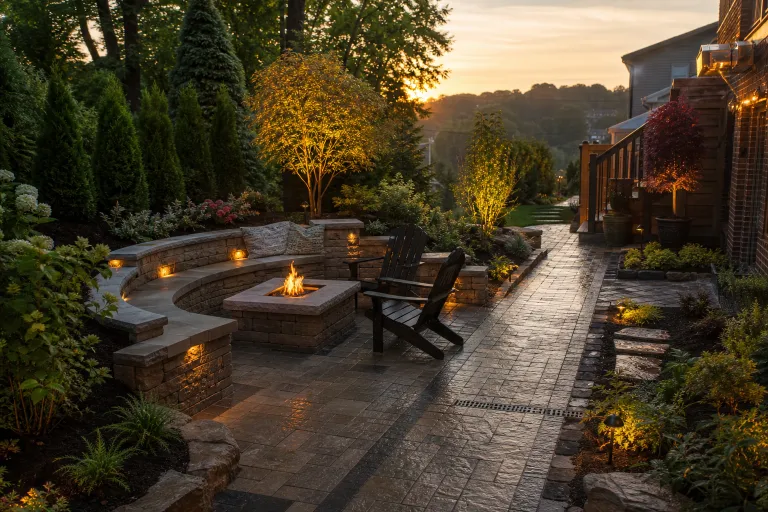
Choose elements that do more than one job. A low retaining wall can manage a grade change, define a patio edge, and provide extra seating. Built-in benches can reduce furniture clutter while creating a finished look.
Make A Small Yard Feel Larger
Open space is valuable. Keep the center of the yard clear when possible, then place taller shrubs, screening, or vertical features near the perimeter. Repeat a limited group of materials so the landscape feels cohesive rather than busy. In a narrow Pittsburgh yard, for example, a compact paver patio near the house can connect to a gently curving side path. A layered planting bed along one fence can add privacy, while a small focal-point tree or fire feature draws the eye toward the far end—the yard gains separate areas for dining, walking, and planting without becoming crowded.
Put Drainage And Grading First
Water management should be resolved before hardscape installation or planting. Positive grading should move water away from the home, while downspouts, swales, French drains, permeable surfaces, and carefully located planting areas can help direct runoff appropriately. Standing water can weaken paver bases, stain walls, damage turf, and stress plant roots. Every property needs a site-specific solution. A rain garden may help some yards manage runoff from roofs or paved surfaces, but it must be properly placed and sized. Review the basics of rain garden planning before treating a rain garden as a catch-all drainage solution.
Choose Durable Materials And Extend Outdoor Use
Material selection affects both appearance and long-term performance. Concrete offers a clean, flexible surface but needs well-planned joints and drainage. Pavers are practical for patios and paths because individual units can be repaired. Natural stone adds texture but requires careful installation. Gravel can suit informal paths when contained with reliable edging, while composite decking can be useful for raised areas. Ask about base preparation, edge restraint, slip resistance, freeze-thaw performance, and maintenance requirements. To make the space useful beyond summer, consider a covered seating area, wind protection, low-glare lighting, weather-resistant furniture, cushion storage, and a properly located fire feature.
Use Plants, Lighting, And Safety Features Intentionally
Plants should strengthen the layout. Evergreens can create year-round screening, flowering shrubs can mark entrances, ornamental grasses can add movement, and ground covers can soften difficult edges. Leave room for mature size, pruning, mowing, and access around fences or structures. Avoid placing trees where roots or branches will eventually crowd foundations, walls, or utility lines. Lighting should guide movement rather than flood the yard with glare. Prioritize steps, changes in grade, gates, walkways, patio edges, and seating areas. Stable walking surfaces, visible edges, handrails where needed, and safe fire pit clearances are essential to a backyard that feels comfortable after dark.
Plan For Maintenance Before Construction
A low-maintenance backyard is not maintenance-free. Design for the work that will happen each season. Keep beds wide enough to weed safely; use edging to contain mulch and gravel; allow access around shrubs and walls; and reserve space for leaf collection and snow storage.
Seasonal Maintenance Checklist
- Spring: Clear debris, inspect drainage routes, edge beds, and repair winter damage.
- Summer: Water new plantings, monitor weeds, trim growth, and check patio joints or settling.
- Fall: Remove leaves, cut back selected perennials, clean gutters, and protect sensitive plants.
- Winter: Keep paths clear, avoid damaging edges during snow removal, and monitor ice-prone areas.
A Practical Planning Sequence
- Define how the backyard needs to function in every season.
- Review sun, slope, soil, drainage, views, and access.
- Create activity zones and select a main focal point.
- Resolve water movement and grading concerns.
- Choose hardscape materials and planting based on site conditions.
- Add lighting, seating, privacy, storage, and safety details.
- Finalize a maintenance plan before construction begins.
Common Mistakes To Avoid
- Choosing plants before measuring the available space.
- Ignoring roof runoff and uphill water flow.
- Building a patio too small for real furniture use.
- Using too many unrelated materials and colors.
- Forgetting snow storage, leaf cleanup, or equipment access.
- Adding impressive features that do not match daily habits.
Conclusion
A successful Pittsburgh backyard does not need to be oversized or packed with features. It needs a clear purpose, durable construction, sound drainage, appropriate plants, and enough flexibility for changing weather. When practical site conditions are addressed first, the finished space can remain attractive, safe, and functional throughout 2026 and for years to come. By balancing aesthetics with long-term performance, homeowners can create an outdoor area that supports relaxation, entertaining, and everyday living while reducing future maintenance concerns. Thoughtful planning also helps ensure that patios, walkways, retaining walls, and landscaping work together as a cohesive design rather than separate additions. Investing in quality materials and professional installation can improve durability, increase property value, and provide a backyard that continues to meet the family’s needs through every season.